October 08, 2026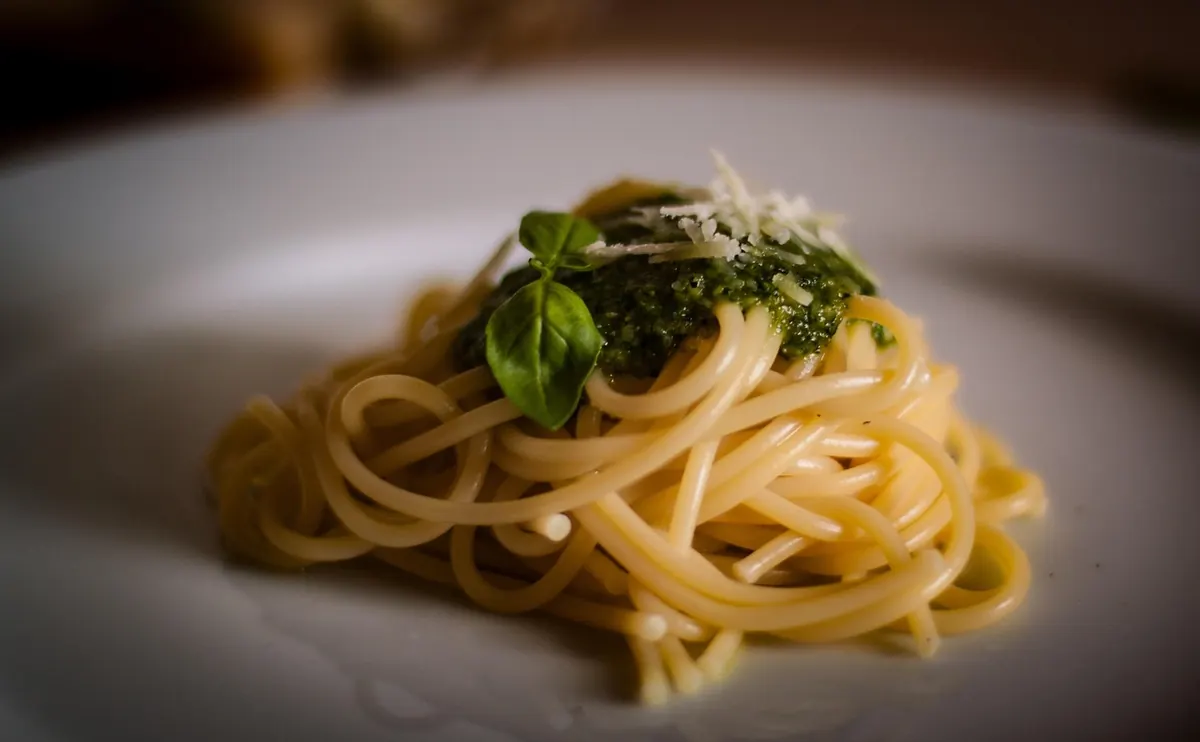
Every summer the same thing happens on the kitchen windowsill. For a few weeks there are just enough basil leaves to tear over a tomato salad, and then suddenly the plants are thick and glossy and you are looking for something to do with a glut. Pesto is that something. Made with sweet Genovese basil picked a few feet from the kitchen door, it takes about ten minutes, requires no cooking, and tastes nothing like the jarred version — brighter, greener, and far more fragrant. This is the classic recipe, scaled for a small food processor and measured in grams, with notes on storing and freezing so none of it goes to waste.
What you need
This makes roughly 250ml of pesto: enough to dress pasta for four generously, with a spoonful or two left over for tomorrow's lunch. The quantities are forgiving, but the ratios are worth respecting.
- 50g basil leaves, picked from their stalks
- 30g pine nuts
- 1–2 garlic cloves, depending on how fierce you like it
- 50g Parmigiano Reggiano, finely grated (or half Parmesan, half Pecorino for a sharper, saltier edge)
- 100–150ml extra virgin olive oil — a mild, fruity one rather than a peppery finishing oil
- A good pinch of flaky sea salt
- Optional: a small squeeze of lemon juice
You will also want a small food processor or a mortar and pestle, and a clean jar with a tight-fitting lid. If you are using a processor, have a spatula to hand; you will be scraping down the bowl more than once.
Start with good leaves
Pesto is only as good as the basil in it. Pick in the morning, once any dew has dried but before the sun has been on the plants for hours — that is when the oils are at their most fragrant. Strip the leaves from the stalks and discard any that are bruised, yellowing or tough. If your plants have started to flower, pinch the buds off; that keeps the leaves sweet and the plant productive for longer.
Try not to wash the leaves unless they are genuinely gritty. If you do, dry them thoroughly in a salad spinner or between two tea towels. Wet leaves make a watery pesto that discolours fast and will not keep. And if you have bought one of those crowded supermarket pots, split it into three or four smaller pots of compost and give it a week on a bright sill before you harvest — the leaves will be thicker and more flavoursome.
The method, step by step
- Toast the pine nuts in a dry frying pan over a low heat, shaking the pan often, for two or three minutes until they are pale gold in patches. Tip them straight onto a plate — they carry on cooking in a hot pan and turn bitter within seconds.
- Drop the garlic and the salt into the processor and pulse to a rough paste. The salt acts as an abrasive and stops the garlic bouncing around the blades.
- Add the basil and the cooled pine nuts. Pulse in short bursts — eight to ten should do it — until everything is chopped but not puréed. Scrape down the sides.
- Add the grated cheese and pulse two or three times to combine.
- With the motor running on a low speed, pour in the oil in a thin, steady stream. Start with 100ml, then loosen with a little more if the pesto looks stiff. You want a spoonable paste, not a pourable sauce.
- Taste and adjust: more salt, more cheese, a squeeze of lemon if it needs lifting. Use straight away, or jar it as described below.
If you are using a mortar and pestle
Pound the garlic and salt first, then the nuts, then the basil a handful at a time, then the cheese, and finally the oil, a little at a time, until everything comes together. It takes twenty minutes rather than ten and it is worth doing at least once in your life. The texture is silkier and the colour stays greener, because you are crushing the leaves rather than shredding them with a blade.
Texture, colour and what goes wrong
The single most common mistake is over-processing. Blades bruise basil, and the heat they generate turns it dark and slightly bitter. Keep the machine cold (chill the jug and blade if you have room in the fridge) and use short pulses rather than a long whizz. If your pesto looks khaki rather than emerald, it is still perfectly edible — just serve it somewhere the colour does not matter, such as stirred through a soup.
Pesto darkens because it oxidises on contact with air. That is chemistry, not spoilage. Pressing cling film directly onto the surface, or floating a thin layer of olive oil on top, keeps the colour for days. A squeeze of lemon helps a little too, and it sharpens the flavour.
Pesto is a formula rather than a recipe: leaves, nuts, cheese, garlic, oil, salt. Get the balance right once and you can swap almost any of the parts.
Storing and freezing
In the fridge, pesto keeps for up to five days in a clean jar with cling film pressed onto the surface and a lid on top. After that the basil flavour fades and the garlic takes over. If you want it to last longer, freeze it.
Spoon the pesto into an ice cube tray, freeze solid, then tip the cubes into a labelled freezer bag. Each cube is roughly a tablespoon, which is a convenient amount for one portion of pasta. For the best results, leave the cheese out of the batch you intend to freeze and stir it in after thawing — grated cheese can turn grainy in the freezer. Use within three months, and thaw overnight in the fridge, or drop the cubes straight into a hot pan at the last moment.
Variations worth trying
- Nuts and seeds: walnuts, hazelnuts, almonds, cashews and sunflower seeds all work. Toast them first and expect a slightly different colour.
- Greens: rocket, parsley, wild garlic in spring, kale, blanched peas or mint. Rocket and walnut is a particularly good combination for autumn.
- Dairy-free: swap the cheese for two tablespoons of nutritional yeast and a little extra salt.
- Sicilian style: add a few sun-dried tomatoes and use almonds instead of pine nuts.
Hard woody herbs such as rosemary and thyme do not work well raw; they stay fibrous and overpower everything else. Soft herbs, on the other hand, are hard to ruin.
Using it well
Cook your pasta, drain it, and take the pan off the heat before you stir the pesto through — direct heat dulls the basil and can split the sauce. Loosen it first with a spoonful or two of the pasta water, which helps it cling to the shapes rather than sitting in a pool at the bottom of the bowl.
Beyond pasta, pesto earns its place on new potatoes, roasted peppers and courgettes, a plain tomato and mozzarella salad, or spread thinly on toast under a poached egg. Thin a spoonful with extra oil and a little lemon juice and you have an instant dressing for green beans or a bowl of summer leaves. Make it in small batches through July and August, freeze what you cannot eat, and you will still be opening a taste of your own windowsill in the middle of January.
Photo: IppikiOokami / Pixabay